Are There Any Weaknesses in Judd Trump’s Game?

103.jpg

The World Champion and undisputed No. 1 at the moment, Judd Trump has displayed a formidable streak in form and trophies through the 2019/20 season. What may have been considered by some as a lucky run has quickly been struck off as we are witness to one of the, if not, the most dominant performances in a single season by any player.

Since the Northern Ireland Open in 2018, Trump has won 9 ranking titles as well as the Masters, as he completed the Triple Crown and won more ranking events in a single season than any other player. He closed out the decade in emphatic fashion as we turn a new year and perhaps a new era. But what parts of Trump’s game can this spell be attributed to? And has he now become the complete player without any weakness?

It’s actually a combination of a few things. Firstly, his long potting has dramatically improved from what it once was. Formerly, his long pots could be thought of as erratic attempts with slim chances of success; but this has now developed into a form more consistent and accurate. Even when he’s against the rail, it doesn’t seem to add further difficulty to the long pot. And when opponents are trying to play safe against Trump, there doesn’t seem to be a safe place on the table.

This leads to my second point which is his ability to convert long pots into one-visit contributions. There isn’t a single player right now that does one-visit as truly as Trump does. As soon as he pots that first red and is in a reasonable position, it’s a safe bet to assume that the next frame will follow shortly after. Something which takes every other player two or three visits to clinch, Trump can do regularly with his exemplary potting; as evident by his century tally.

Furthermore, Trump’s safety game has seen a significant step-up. Under the circumstances where there isn’t a pottable ball on the table, Trump is able to put his opponents in tremendous trouble under the cushion, utilising his creativity as well as experience. This goes hand-in-hand with another point I wanted to acknowledge in that Trump’s snooker IQ has made some leaps. I’m not saying that it wasn’t apparent previously, but this is particularly noticed in his improved shot selection, patience, ability to visualise/place the cue ball where he needs to and aptitude for picking out plants in a pack. Definitely worth mentioning.

Lastly, temperament is something that’s always come into question when looking at Trump’s ability. It’s safe to say that even the best of the best fell under the spotlight on some occasions, so there will always be instances where Trump would succumb to this, even with his position at the top. However, it is unreasonable to say that Trump lacks temperament or bottle anymore as he has been able to hold his nerve against the best players on multiple occasions. The prime example would be to observe his semi-final performance against Maguire in the Players Championship as Trump made one of the best pressure counter-clearance for the past few seasons.

So by the sounds of it, Trump’s game pretty much perfect, right? Almost. Unfortunately, nothing is quite perfect. While Trump’s one-visit game is substantial, his break-building and cue ball control isn’t quite where it should be. More often than not, he is finding himself having to pot out of situations in order to keep a break going. If he had more of an O’Sullivan or Ding touch then his life on the table would be significantly easier.

Also, Trump needs to keep a level head. He’s been a terrific champion and ambassador for the sport thus far, so there’s no complaints there. But he needs to not let the confidence get to his head. Trump will understand that he still has work to do, namely when it comes to winning more majors and keeping the streak going. This can only happen if he continues as he is and not get complacent.

As it stands, Trump has the fear factor that can be associated with O’Sullivan in that his opponents are aware any mistake they make on the table may be their last. Trump has made a multitude of tweaks to his game which have synergised into a nightmare for others on the snooker table. There isn’t anyone close at the moment, but will someone be able to step up, or will Trump’s game have to fall incredulously before he receives competition?


98.jpg

Like this Short? Click here to read: All The Things I've Said About Judd Trump Throughout The Season

Have an idea for a Short post? Feel free to get in touch using the social media links below! Thanks for reading!

Player Spotlight – Mark Allen

102.jpg

Five-time ranking event winner Mark Allen has been one of snooker’s top contenders via his residence in the Top 16 for over a decade, as he continues to play at his top level. Otherwise known as ‘The Pistol’ for his quick-draw, snappy cue action, Allen has developed an upfront style and character throughout his professional career that many are drawn towards.

Allen turned professional in 2005 after an already successful young and amateur commencement to his snooker career. This included a win of the World Amateur Championship in the prior year as well as further successes from his ventures at a very young age. His young talents were well developed as Allen was able to reach the prestigious Top 16 within a few seasons of turning professional. Despite not winning any professional events yet at this stage, it was achieved by Allen progressively bettering the distances he would reach in tournaments.

This involved his first qualifications for the World Championship in 2007 and 2008 for which he has been a top seed ever since. Allen’s third year at the Crucible in 2009 was his best attempt at winning the big one as he reached the semi-finals. His endeavour that year included victory over defending champion, Ronnie O’Sullivan in the second round, but was denied a trip to the final by fellow Class of ’92 compatriot, John Higgins. Unfortunately, Allen has yet to reach further than the semi-final stage of the WSC…yet.

The turn of the decade saw Allen reach glory and acclaim as he started to reach more quarters and semi-finals. His first shot at ranking gold came at the 2011 UK Championship as he squared off against the inventor of naughty snooker in his infancy, Judd Trump. It was a closely fought match which included an inspiring comeback by Allen, but was sadly denied the Triple Crown that year. However, Allen was able to secure his first ranking title that season with an impressive performance at the World Open in 2012. Even more remarkably, Allen was able to successfully defend his maiden ranking title the following year.

In 2016, Allen was able to add the PTC (Players Tour Championship) to his list of accolades although, it wasn’t until late 2017-18 where we saw a significant step-up in form and match play. Allen’s potting and break-building had noticeably improved, causing more problems for those that competed against him (including those at the very top).

Allen was able to start 2018 strongly with his successful completion of the Masters, which included victories over Class of ’92 rivals, O’Sullivan and Higgins. He was then able to continue his form through to next season as he claimed the International Championship to further improve his ranking position and reputation as a credible threat. Allen just came shy of winning the UKC where he lost out to O’Sullivan in a historic day to remember. While this was an incredibly strong performance at York, Allen was somehow able to travel to Scotland the very next day to continue playing the whole week as he won his fifth ranking title with the Scottish Open.

Through a hard-working ethic and mind-set to be among the very best, Allen has been able to forge his way to the top level of snooker where he can see the fruits of his labour. Still realising that he has some more work to do, Allen continues to strive towards the titles that still elude him, as The Pistol still has some ammunition in the chamber.


35.jpg

Like this Short? Click here to read: Player Spotlight – Barry Hawkins

Have an idea for a Short post? Feel free to get in touch using the social media links below! Thanks for reading!
Should the World Snooker Championship Travel Around the World?

101.jpg

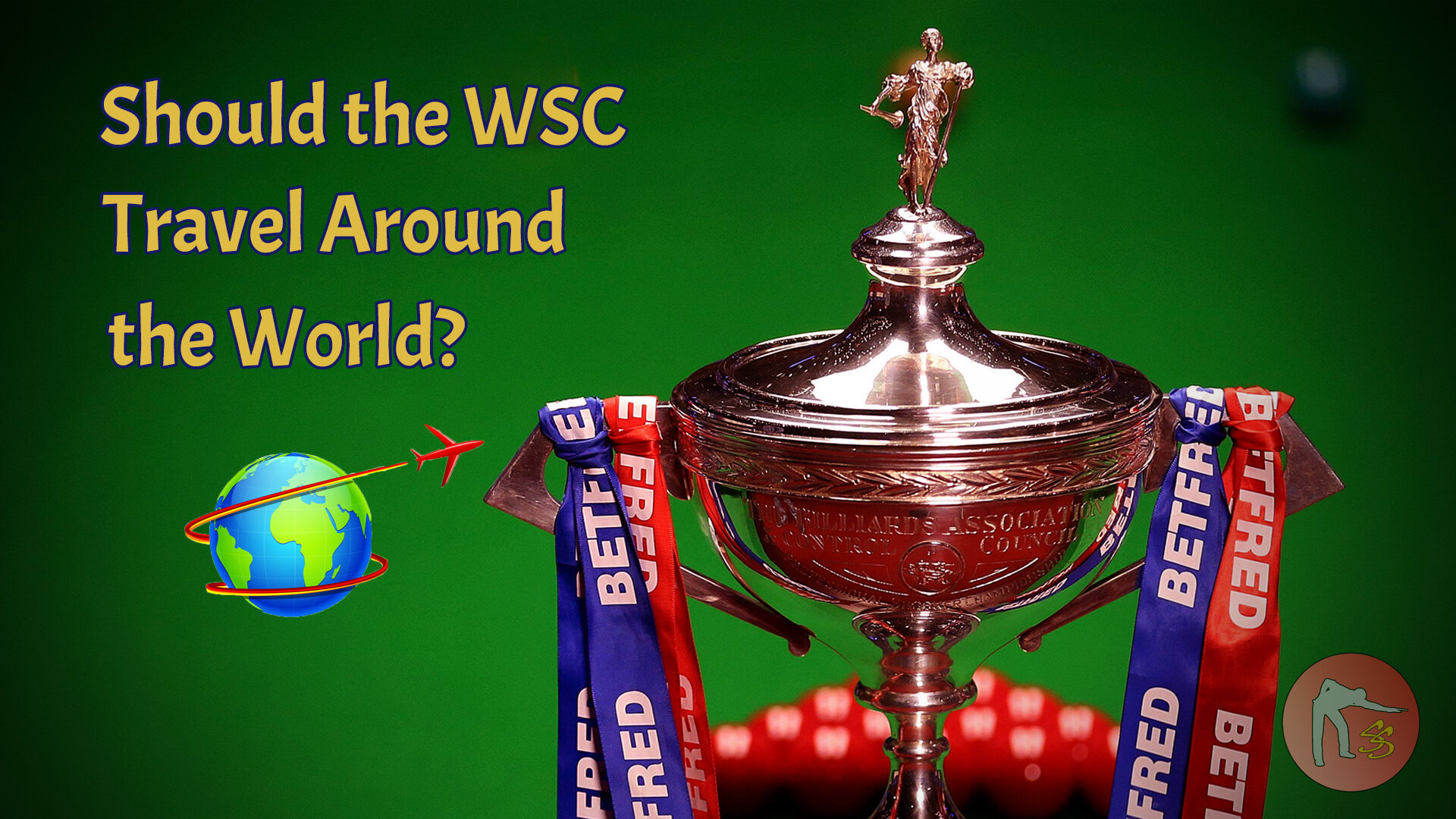
The Crucible has housed the World Championship for 43 years, providing countless moments, winners and spectacles (Dennis Taylor). However, at some points there have been whispers as to whether Sheffield should continue to accommodate snooker’s largest event. Is there any merit in allowing the WSC to travel around the globe or should tradition continue to dictate its future?

I don’t joke on my ‘About’ page when I say that snooker is pretty much the only sport I care to follow. So I can’t say specifically, but I know there are sports in which their prize tournaments are held in differing venues at each iteration. I guess it could be comparable to how the World Cup or the Olympics, despite being every four years, travel around the world.

There’s no denying that wherever the WSC was chosen to be held, it would boost the local economy tremendously. Looking at what’s happened with Sheffield, the WSC has boosted their economy by over £100m since 1977. Imagine the wonders it could do if it travelled to similar locations in countries across the ocean.

The main case against keeping the WSC in one constant venue are the limitations it provides. Considering the increased globalised presence of the sport, it’s sometimes seen as unfair to other countries that are as fond of snooker as the UK don’t get the opportunity to see the top tournament in their hometowns.

There’s also the fact that they could select venues that contain more seating to allow the amount of people watching the WSC in person to multiply. The Crucible currently seats 980 people but there wouldn’t be any issues with selling 2-3 times the amount of tickets if an overseas venue could support it. And I am certain that World Snooker (now WST) have had numerous offers that dwarf the amount offered by Sheffield when they toy around with the idea of moving elsewhere.

But why does the World Championship remain in Sheffield after all these years? Mainly due to the Crucible being synonymous with the WSC. When people think of the Crucible, they’ll think of snooker; when people think of snooker, they’ll likely think about the Crucible. And it all goes back to the tradition. The memories and highlights; the ups and downs; the late night dramas. If you were in any of those 980 seats, you’d have been able to witness it all with a great view of the table. Not something you’d be able to achieve in a larger venue.

That’s why the contracts with Sheffield are always being renewed. And why WST aren’t accepting the substantial offers that come their way for the WSC. It also provides a level of comfort and consistency for the players as the WSC is the fixed constant in the calendar where they know exactly what they’re working towards.

That’s perhaps why they are focusing on such high-ticket events in countries like China and Saudi Arabia. To provide the experience to those who reside there; to see the top players compete where the stakes are seemingly as high as the World Championship. Don’t be surprised if we see a China Triple Crown series in the future. The only way I can see WST experimenting with the idea of taking the WSC elsewhere was if they expected the Last-32 draw to contain a significant number of Asian competitors. But if they did try to relocate the tournament, it would certainly not be well received.

It all depends on how you view the WSC. Do you view it as something similar to the World Cup and Olympics, where the main event tours across the globe, reaching differing continents? Or, much like snooker itself, do you see it as a standalone event with its own established history at the Crucible for which its location has become a paramount factor in its attraction? I personally think Jason Ferguson (WPBSA Chairman) said it best: ‘taking snooker from here would be like taking Wimbledon out of Wimbledon’.


2.jpg

Like this Short? Click here to read: Brief History of The Crucible

Have an idea for a Short post? Feel free to get in touch using the social media links below! Thanks for reading!

The Old Snooker Ranking System (#100)

100.jpg

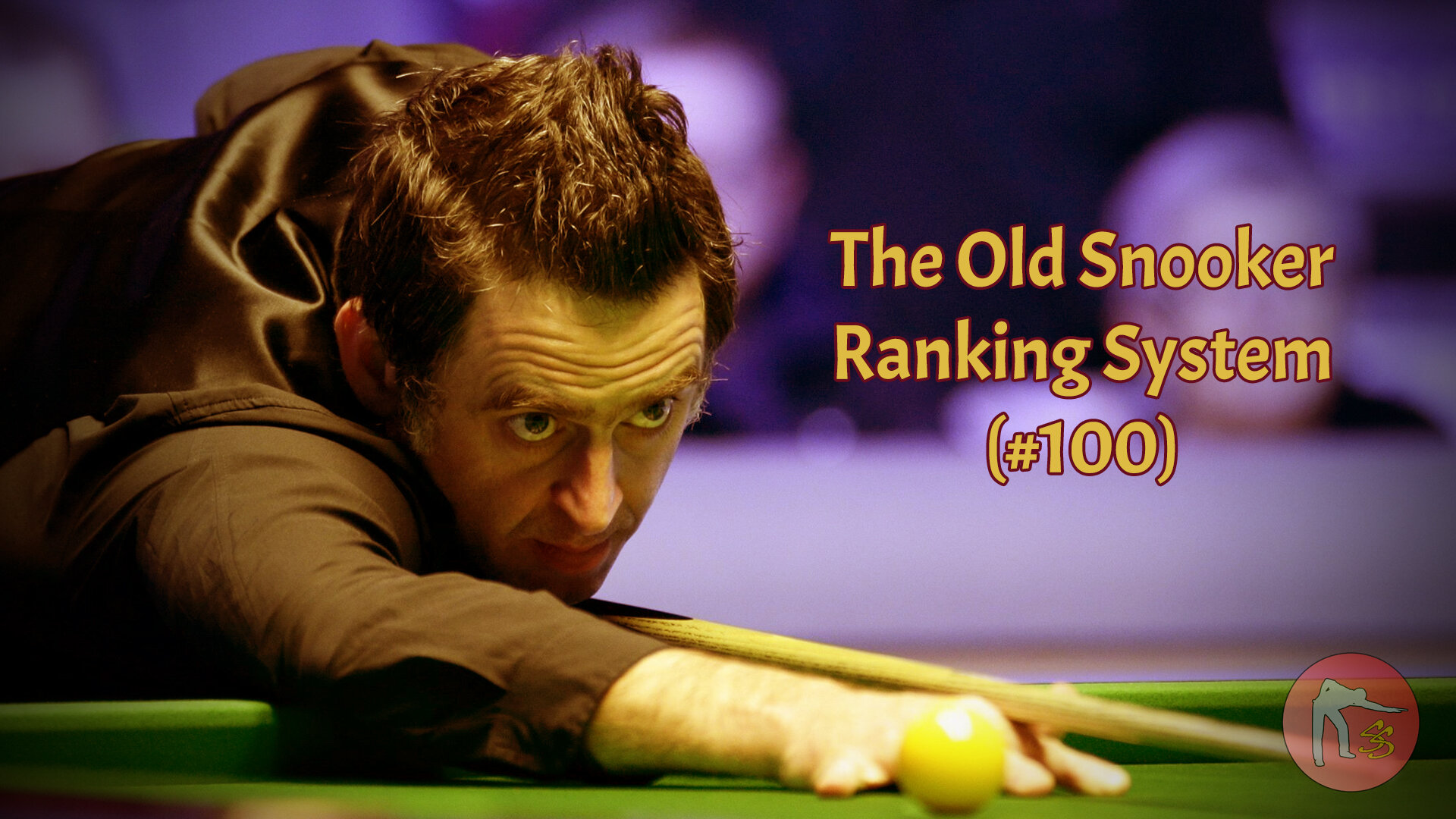
Whether you’re a fan or not, we’re all likely familiar with the current ranking system which consists of a rolling prize-money accumulation from the previous two years. If you’re unfamiliar with how the ranking system works, check out Snooker Short’s very first post which explains this (scroll to the bottom). So it’s fitting for the 100th post to circle back to the ranking system and how it used to work, then we can understand how things stand presently.

The ranking system has gone through multiple changes throughout the years but has primarily shifted from being a point’s based tariff to one based on the earnings received by a player, determined by their result in a tournament. Initially, when the list was introduced in 1976/77, rankings were measured against a player’s performance in the past three World Championships (as it was the only classified ranking event). Five points were awarded to the winner, four points to the finalist and so on…

This was the ongoing method until the 1982/83, where more players and ranking events were being added to the sport. For this reason, it was necessary to incorporate performances from these further events to a player’s ranking tally. Points allocated to each event were determined by their relative weighting. For example, in the 1998/99 season, winning the WSC earned 8100 ranking points; and the UK winner would earn 6075. The other ranking events that season would reward up to 4560 ranking points.

Another way the ranking system has changed is through the way seeding revisions were implemented. Formerly, the rankings used to be updated just once, at the end of every season, with tournament seedings based off this list. Obviously, the problem with this is that it wouldn’t reflect the currently best performing players through the season.

Since 2010/11 to now, rankings are updated following every tournament (still using the points basis until 2014/15) – databases even go so far as to produce provisional rankings so we can predict future standings. Seeding lists are updated frequently throughout the season to be able to fairly organise future events.

The reason seedings were necessary was because a player safely in the Top 16 at the end of a season didn’t have to perform well at all to be entered in the Masters. Introduction of seeding revisions provides incentive for those players to try and maintain their rankings as well as encourage lower ranked players to perform highly in the periods between the start of the season and the corresponding event.

Lastly, from the 2014/15 season, the system shifted from a points-based ranking system to the money list we are all accustomed to today. This means that whatever prize money a professional earns from a ranking event equates to the amount of points added to their ranking tally. Is it the perfect system? Maybe not. Is it better than what it used to be? Perhaps. Should it be protected from the fact that other countries can throw a substantial amount of money towards WST in order to ‘create’ a World Championship? Yes.

Hopefully this helped provide a bit of insight as to what the old ranking system was like. Thanks for reaching this point and reading the 100th Short post! Here’s to another 100!


1.jpg

Like this Short? Click here to read: How does the snooker ranking system work?

Have an idea for a Short post? Feel free to get in touch using the social media links below! Thanks for reading!